The Jar at the End of the Table
Chapter 1Beneath the Napkin
Rivka put a napkin over the jar.
Around her, girls were opening sandwiches and little boxes of fruit. Her Bais Yaakov classroom smelled of bread and oranges.
Mama had packed potato soup in a small insulated jar. Rivka liked it. She had asked for the last portion that morning while Mama, in her dark blue tichel, warmed it for packing.
Now she wished she had asked for bread instead.
Tova looked toward the jar.
"What did you bring?"
"Lunch."
That answer was true and not very useful.
Chapter 2The Ordinary Boxes
Rivka ate the apple from her bag first.
She had fifteen minutes for lunch. The jar stayed closed.
On Monday a girl had asked why another girl's sandwich contained cucumber. It hadn't been a cruel question, but it had turned into a long discussion of what belonged in sandwiches.
Rivka didn't want today's discussion to belong to her potatoes.
She could imagine the spoon stopping halfway to her mouth while everyone waited for her to explain.
So she folded the napkin into a square and took a tiny bite of apple.
The imagined discussion was already taking the time the real meal needed.
Chapter 3No Spoon Moving
Tova noticed the closed jar again.
"Are you saving it for later?"
"Maybe."
Rivka would have lessons until the afternoon. Later was not a particularly useful meal plan.
"I brought soup," she said quietly.
"What kind?"
"Potato."
Tova nodded and went back to her sandwich.
The conversation had ended before Rivka's imagined version reached its second question.
She pulled the napkin away.
Then she heard a chair move and covered the jar again.
One ordinary response had helped. It hadn't erased every fear about the next person.
Chapter 4A Meal, Not a Speech
Their teacher passed the table and reminded the girls there were eight minutes left.
Rivka looked at the apple core.
She was still hungry.
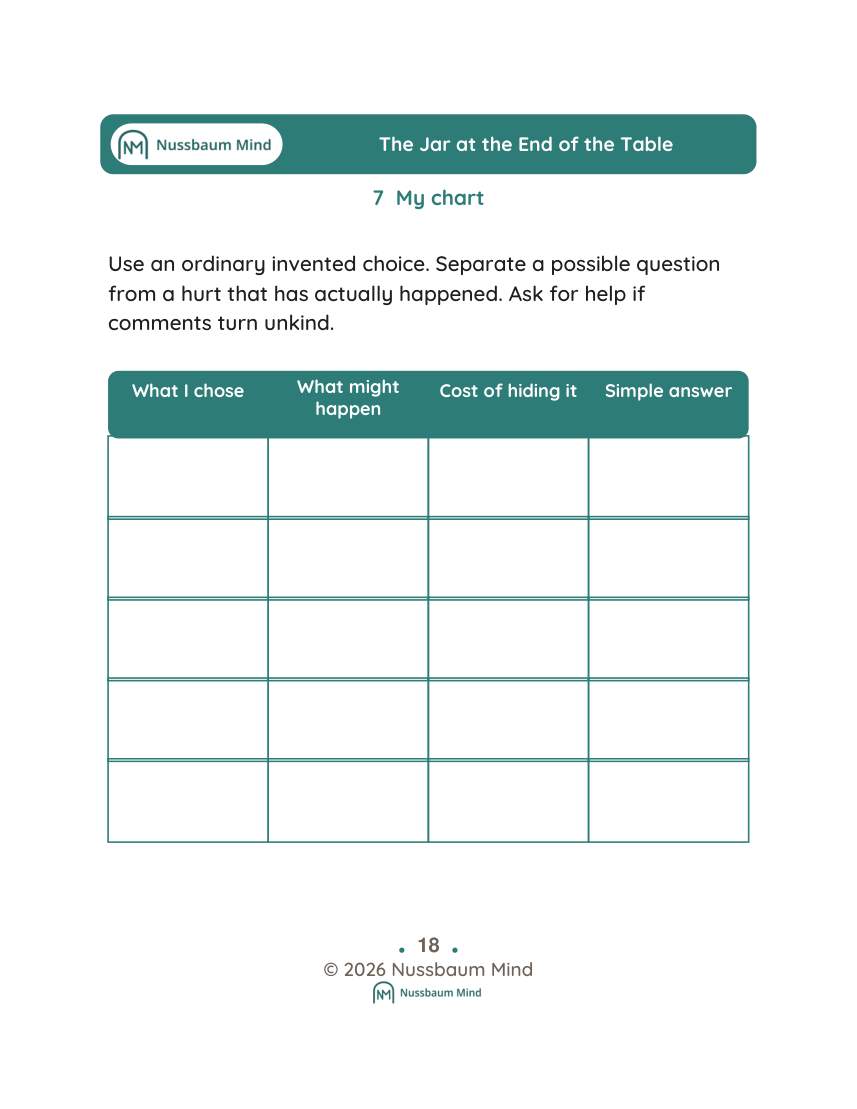
If she left the jar closed, she would definitely miss the lunch she wanted. If she opened it, someone might ask about it.
Those were different kinds of certainty.
She unscrewed the lid and set it safely on her napkin.
The soup was warm, not steaming. Mama had packed it ready to eat.
Rivka took the first spoonful.
She didn't announce a reason for bringing it.
It was lunch, and she was eating.
Chapter 5The Potato Question
A girl across the table looked over.
"Potatoes in a jar?"
"Potato soup."
"I only like potatoes roasted."
Rivka felt her spoon slow down.
She could defend soup, or say roasted potatoes were boring, or put the lid back on.
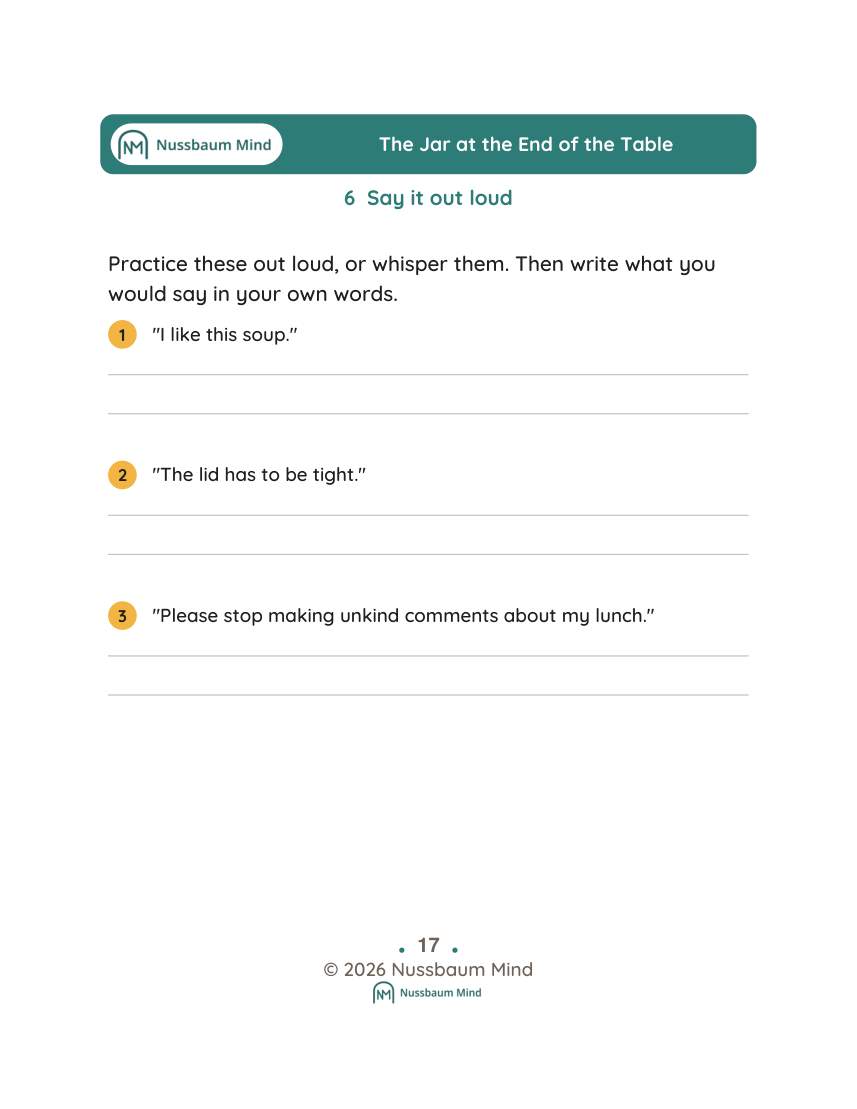
"I like this soup," she said.
The girl nodded.
"My brother does too."
Then she asked another girl for the time.
Rivka finished the next spoonful.
Different lunches had survived in the same room without a vote on which one ought to exist.
Chapter 6The Lid in the Bag
Rivka emptied the jar before the bell.
Tova helped her find the lid, which had slipped beside the bag.
"Do you bring soup often?"
"When there's some left from supper."
"Does the jar keep it warm?"
"Yes."
This was a question Rivka could answer without explaining her whole family or making a case for soup.
She wiped the outside, closed the jar, and packed it away.
She had eaten more hurriedly than she would have liked.
Opening it sooner next time would give her more time.
That was something she could change, even if questions still arrived.
Chapter 7Friday's Choice
On Friday morning, Mama asked whether Rivka wanted a sandwich or the remaining soup.
Rivka thought about the jar on the classroom table.
She still didn't love being noticed.
She also remembered being hungry while a perfectly good meal waited under a napkin.
"Soup, please."
Mama packed it with the spoon.
Rivka put an apple beside it and checked that the lid was tight.
She didn't ask Mama to promise nobody would comment.
Mama couldn't pack that promise into the jar.
Chapter 8At the Beginning
At lunch, Rivka opened the jar before eating the apple.
Tova had brought a small cheese roll.
Another girl asked whether soup was difficult to carry.
"The lid has to be tight," Rivka said.
Then she ate.
There might be another question next week. Someone might even dislike the same food aloud.
Rivka didn't have to become pleased about every remark.
If a comment turned unkind, she could ask for it to stop or get help from her teacher.
But she didn't need to hide an ordinary lunch before anyone had been unkind at all.
She put the empty jar beside her bag with the lid on top.
There was still time for the apple.