The Card for Wednesday Afternoon
Chapter 1Not Her Name
The card on the table had the name Mrs. Katz.
Not a teacher. Not a family friend.
Mama had explained that Mrs. Katz was a qualified counselor who worked with girls.
Leah's worries had been making school mornings and ordinary homework difficult for several weeks. Mama and her doctor had talked with her about getting more help. Wednesday afternoon was the first appointment.
Leah moved the card beneath the salt shaker.
"Perhaps I'm better now."
She had finished breakfast without a stomach full of worry that morning.
One easier breakfast seemed like a possible escape from the whole conversation.
Chapter 2The Blank Line
Mama, wearing her brown sheitel, sat beside her.
"I'm glad this morning felt easier. It doesn't erase the difficult mornings you've told us about."
"What if I don't know what to say?"
"That can be one of your questions."
They turned the card over. Mama gave Leah a separate sheet for anything she wanted to remember.
Leah wrote: What if I don't know what to say?
Then she covered it with her hand.
It looked less like a list of questions and more like proof that she was strange.
Chapter 3Who Needed to Know
At Bais Yaakov, Leah's friend asked whether she could come over on Wednesday.
"I have an appointment with Mama."
"What kind?"
Leah looked at the classroom doorway.
She didn't have to lie. She didn't have to tell the hallway everything either.
"Something private. Could we choose another day?"
Her friend said Thursday might work.
Leah had imagined a dozen difficult questions. The actual conversation ended with two girls checking when to lend each other a book.
Mama and the adults arranging support needed information. A curious friend didn't need the same amount.
Chapter 4The Waiting Room
On Wednesday, Leah and Mama arrived early.
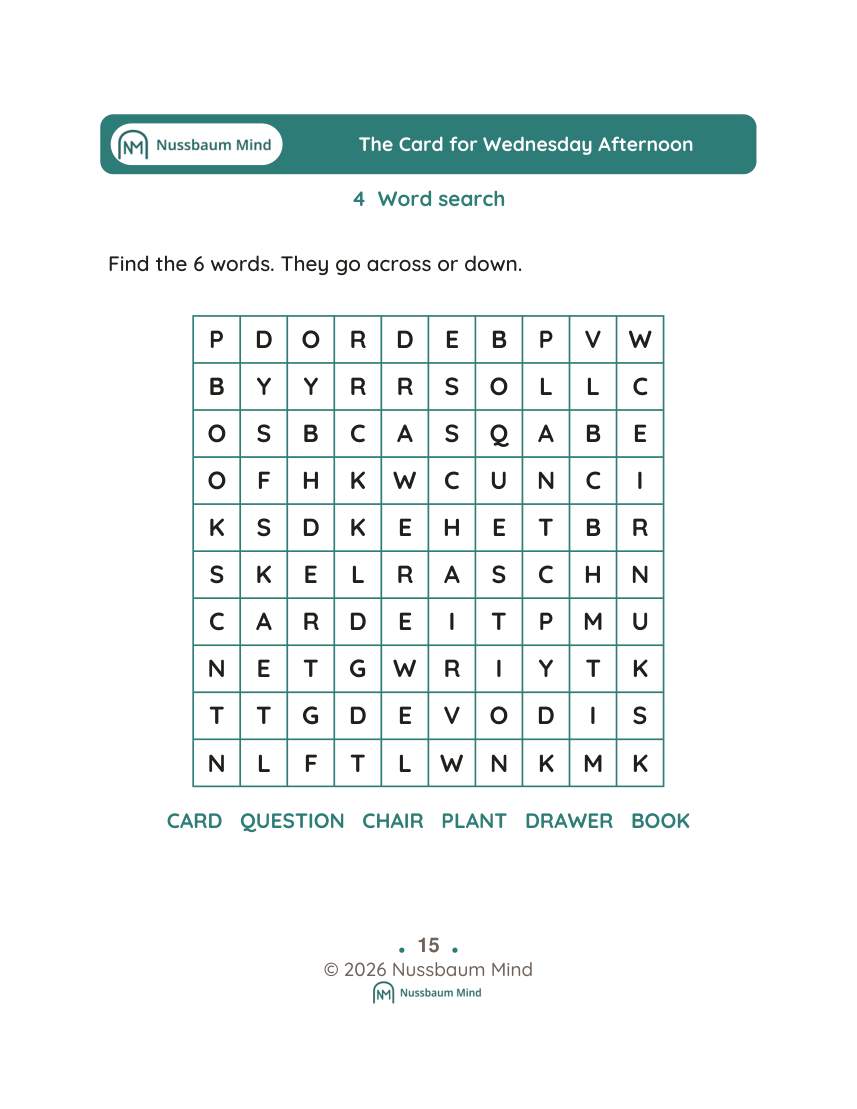
The waiting room had two chairs, a plant, and a basket of ordinary books.
Leah wanted to look perfectly comfortable when Mrs. Katz came out. Then perhaps the counselor would decide the appointment had been a mistake.
Her knees bounced beneath the chair.
She stopped them, started again, and finally told Mama, "I'm nervous."
Mama nodded.
"You can take that into the room with you."
Being nervous wasn't a reason the conversation couldn't begin. It was part of what the appointment was for.
Chapter 5Before the Story
Mrs. Katz came to the door wearing a neat gray sheitel.
She greeted them and showed Leah where she could sit.
Before asking Leah to tell her about the worries, she explained how appointments worked, who would be involved, and the privacy rules and limits that applied to her work. Leah could ask questions if anything was unclear.
Leah took out her small sheet.
"What if I don't know what to say?"
"Then we can begin with that," Mrs. Katz answered.
Leah didn't have to produce a polished speech to deserve the time in the room.
She started with Tuesday's homework, because it was easier than explaining every school morning at once.
Chapter 6One Ordinary Example
She described reading the same instruction again and again because she feared doing it wrong.
Mrs. Katz listened and asked questions about what happened, what Leah noticed, and what she did next.
Leah didn't feel better simply because she had entered the room. She also didn't have to decide whether every question was helping before answering it.
At one point she said, "I don't know."
Mrs. Katz accepted that answer and approached the question another way.
Leah had thought support meant revealing everything perfectly to a stranger in one afternoon.
This was one example, one person listening, and room for questions.
Chapter 7Afterward
Mama joined the agreed part of the appointment. They discussed a plan appropriate to Leah's needs and what to do if she needed more help before the next visit.
On the way home, Mama asked what Leah wanted to tell her.
"It wasn't like an exam."
"I'm glad."
"I'm still not sure about everything."
"You can keep asking questions. We can talk about whether the support feels right for you."
Leah was not signing away her right to be heard because she had agreed to one appointment.
She also didn't need the first afternoon to solve every worry before she could count it as a real beginning.
Chapter 8The Card in the Drawer
At home, Leah put the appointment card in her desk drawer.
The question sheet stayed beside it.
She added another question that had occurred to her on the walk. The writing was crooked because the paper had been folded, but it was readable.
The next morning had its difficult part. Leah told Mama honestly, and they followed the support plan they had agreed with the people helping her.
Her friend came on Thursday after their mothers arranged the visit. They talked about the book.
Leah could be a girl with schoolwork, friends, questions, and extra help.
The card didn't replace those other parts of her.
It named a person she could begin talking with, before she knew exactly how to begin.